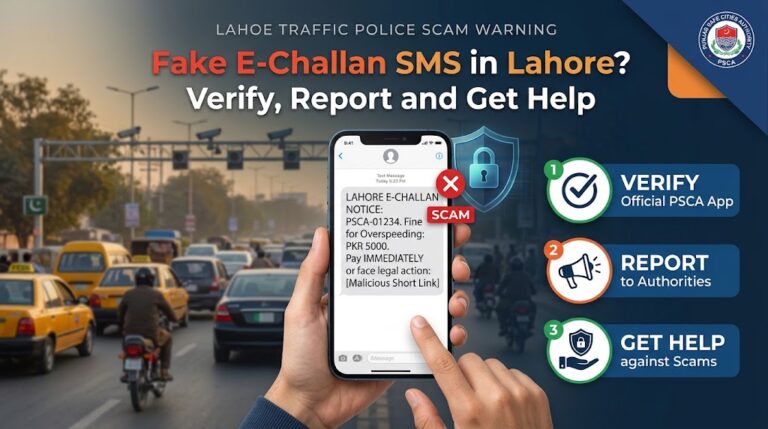
If you receive an unexpected traffic fine message, verify it before opening the payment link. This guide helps Lahore drivers who suspect fraud, have shared banking details or have paid through a suspicious website. A fake e-challan SMS in Lahore can create two urgent questions: do you owe a fine, and is your money at risk? Start by checking the official PSCA record. Contact your bank immediately if you disclosed sensitive banking information or noticed an unfamiliar transaction. Then preserve the message and document what happened. These steps help you protect your account, report the incident and decide whether you need legal advice.
How to Handle a Fake E-Challan SMS in Lahore
Check the alleged fine through the official PSCA e-challan portal, rather than the message’s payment link. If you shared banking information or lost money, contact your bank immediately through a verified channel. Standard Chartered Pakistan has publicly warned about fraudulent e-challan payment links in SMS and WhatsApp messages. That warning gives drivers a practical reason to pause before paying. According to Standard Chartered Pakistan, a suspicious message does not prove that you have no outstanding traffic fine. Check the official record separately.
Verify Your Traffic Fine Before Making a Payment
Open the official portal independently and check its address carefully. PSCA’s search form asks for your vehicle’s plate number and a CNIC or chassis number. Enter those details only after confirming that you have reached the correct website. Compare the available record with your vehicle and circumstances. Save the relevant challan information for reference. If the search shows no matching record, avoid the suspicious payment link and seek clarification through official channels. A missing result alone does not establish fraud.
Identify Whether You Face Fraud or a Challan Error
A scam message and an incorrect traffic fine require different responses. A scammer may seek your money or account details. An official challan may contain information you dispute. Reporting the scam does not automatically resolve the traffic matter. For example, the official record might show a vehicle that differs from yours. Preserve that record and explain the discrepancy to the issuing authority. Keep any suspicious payment message separately. This distinction helps you ask the correct institution for the action you need.
Respond According to What You Shared
Your next step depends on what happened after the message arrived. Explain the details accurately when you seek help.
You Opened the Link but Entered Nothing
Close the page and avoid any download or installation request. Opening a link alone does not establish that someone accessed your bank account. Check whether you entered information, approved a request or installed unfamiliar software. Keep the original message and note when you opened the link. Contact your bank if you notice unusual account activity. Seek technical help if you installed unfamiliar software. Use a trusted device when changing affected passwords.
You Shared Card Details, a Password or an OTP
Contact your bank through its official app, website or the number on your card. Explain exactly what you shared. Ask which immediate restrictions your account or card needs. Do not wait for money to disappear before reporting the exposure. Follow the bank’s instructions and request a complaint reference. Tell the bank about any payment approval or one-time password you supplied. Accurate information helps it assess the incident and advise you.
You Paid Through the Suspicious Link
Report the payment to your bank immediately. Provide the amount, transaction reference, payment time and recipient details you can see. Ask whether the bank can stop, trace or dispute the payment. The options depend on the transaction and its status. Explain whether you made the payment yourself or discovered an unfamiliar debit. Reporting promptly does not guarantee a refund. Don’t delay reporting to your bank while arranging a legal consultation.
Keep the Evidence Your Complaint Needs
A clear complaint connects the message, your actions and any resulting loss. Keep original messages and complete screenshots where possible. Cropped images may omit sender details, timestamps or context that helps explain the incident. Collect these records:
- The original SMS or WhatsApp conversation.
- Screenshots showing the sender, message and time.
- The suspicious website address.
- Payment receipts, transaction references and relevant bank alerts.
- Complaint references and written replies.
- Any related official challan record.
Write a brief timeline while you remember the details. Separate what you observed from what the sender claimed. Share sensitive documents privately with the relevant institution or your lawyer. Remove account numbers, CNIC details and private contact information before posting anything publicly.
Report the Incident to NCCIA
The National Cyber Crime Investigation Agency provides an online complaint portal and lists helpline 1799. Use its official channels for reporting and guidance. Avoid contact numbers that the suspected scammer supplies. Explain how the message reached you, what information you disclosed and whether you lost money. Keep the submission acknowledgment and subsequent correspondence. Report the matter to your bank separately when it concerns your account or a payment. Each institution handles a different part of the problem.
Get Legal Help When the Dispute Becomes Complicated
A lawyer can help when you face a disputed financial loss, suspected identity misuse or an unresolved complaint. Bring the messages, transaction records, complaint references and institutional replies. These documents help the lawyer assess the evidence and possible remedies. Ask what work the lawyer recommends, what it will cost and which outcomes remain uncertain. You don’t need legal representation just to check a challan. A consultation becomes more useful when you need advice on a specific dispute or the next formal step.
Take the Next Step With Clear Records
Treat a fake e-challan SMS in Lahore as a reason to verify, document and act promptly. Check the official fine record independently. Contact your bank if you disclosed banking details or made a suspicious payment. Preserve your evidence and use NCCIA’s official reporting channels. Keep any genuine traffic dispute separate from the fraud complaint. If you need advice about an online fraud matter, contact Chaudhary & Associates with your records. The firm lists online fraud assistance and digital evidence support as part of its services. A consultation can help you understand which legal steps fit your situation.
Frequently Asked Questions
Can I trust a message that displays an official-looking sender?
Do not rely on the sender name or branding alone. Check the alleged fine independently through the official PSCA portal.
Should I delete the message immediately?
Preserve the original message and relevant screenshots first. They can help explain your complaint. Avoid further contact through suspicious links or numbers.
Can I report an attempt if I lost no money?
Contact NCCIA for guidance about the suspected attempt. Explain what happened and whether you disclosed any personal or banking information.
Will my bank refund the payment?
A report does not guarantee a refund. The bank will assess the transaction and circumstances. Request a complaint reference and keep its written response.