
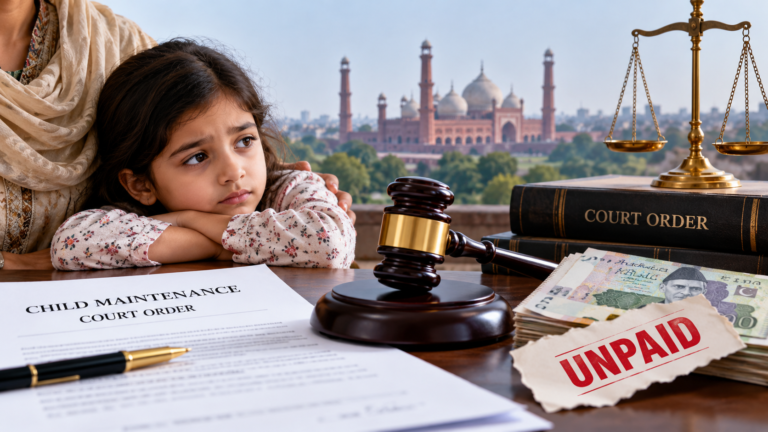
If you already have a maintenance order but payments have stopped, your next step is to assess enforcement. Don’t assume you must restart the original maintenance claim. Unpaid child maintenance in Lahore creates immediate pressure when school fees, groceries, and medical expenses cannot wait. Yet another verbal promise does little to explain when the missing money will arrive. Start by identifying whether your order is interim or final, then record exactly what remains unpaid. This guide explains how to prepare for legal advice, what an execution application involves, and which questions deserve attention before accepting a settlement.
What to Do About Unpaid Child Maintenance in Lahore
Obtain your court order and prepare a month-by-month payment record. If you have a final maintenance decree, ask about applying for its execution. Execution means asking the court to enforce the decree, rather than deciding the original maintenance claim again. Section 13 of the Family Courts Act addresses enforcement. It allows the court that passed the decree to execute it, or another civil court the District Judge directs. Your lawyer should confirm the appropriate court for your case. See the Punjab Code’s Family Courts Act, section 13. Bring any later court orders as well. The original judgment alone may not reflect the current position if later proceedings changed it.
Check Whether Your Order Is Interim or Final
An order made during a pending case needs different handling from a final decree. The document’s wording and the case’s present stage matter more than what either party calls it.
When the Maintenance Case Is Still Pending
Interim maintenance provides support while the court considers the case. If these payments stop, promptly inform your lawyer and raise the default before the court hearing. Punjab’s Section 17A addresses maintenance proceedings and consequences of non-payment, including consequences affecting the defendant’s defense. See the Family Courts Act, section 17A. Keep the interim order, hearing dates, and payment evidence together. Do not assume you must wait for the final judgment before reporting missed payments. Ask what application or submission is appropriate at the present stage.
When You Already Have a Final Decree
A final decree gives the starting point for calculating what must be paid. Check the amount for each child, commencement date, payment terms, and any provision for increases. Read it alongside the judgment and subsequent orders, rather than relying on a remembered monthly figure. Your lawyer can then assess execution and identify disputed items. If the father says he appealed, ask for the actual documents. An assertion that “the case is in appeal” does not explain whether a court has ordered enforcement to stop.
Calculate Arrears Before Filing an Application
Arrears are amounts that became due but remain unpaid. Your calculation should show the amount due each month, payments received, and the remaining balance. Record partial payments honestly and keep proof of each entry. For example, suppose an order requires PKR 20,000 monthly, with no increase during the example period. Three months produce PKR 60,000 due. If PKR 15,000 was received towards those months, the recorded balance is PKR 45,000. This is an illustration, not a standard maintenance rate. Separate disputed payments from agreed ones. If the father claims that clothing or direct school payments replaced monthly maintenance, record those claims for review. Do not silently deduct or disregard them without examining the order and supporting evidence.
What to Prepare for a Maintenance Enforcement Consultation
A complete file helps your lawyer identify the next step and reduces avoidable requests for missing information. Bring available copies of:
- The judgment, decree, interim order, and subsequent court orders.
- Your CNIC and the child’s relevant identification documents.
- Bank statements, transfer receipts, and court-deposit records.
- A month-by-month arrears calculation.
- Previous execution applications and orders, if any.
- The father’s known address and lawfully available employment details.
- Messages acknowledging missed payments or proposing settlement.
Preserve original records and keep copies for everyday use. Do not publish the child’s documents, bank details, or court papers on social media. If something is missing, tell your lawyer rather than guessing its contents.
What an Execution Application Should Address
A properly prepared application identifies the decree, outstanding obligation, relevant payments, and enforcement sought. Your lawyer should explain what you’re asking the court to do and why that request fits your circumstances. Ask whether information about employment, assets, or location could assist lawful recovery. Provide only details you already hold legitimately. Do not access private accounts, obtain passwords, or impersonate anyone to collect evidence. The court may need to examine objections or disputed payment records before deciding the next measure. Filing an application does not guarantee immediate payment. Service difficulties, contested calculations, and practical recovery problems can affect progress.
When the Father Claims Unemployment or Lives Abroad
Tell your lawyer about these circumstances early, because they can affect the practical enforcement approach. Assess a claim of unemployment alongside the existing order and any application seeking to change it. Ask what evidence is relevant, rather than arguing over unsupported statements. If the father lives abroad, provide his known country, address, and available employment information. Ask which steps can proceed in Pakistan and whether advice in the foreign jurisdiction is necessary. Do not assume a Pakistani decree automatically produces deductions from an overseas salary.
Discuss Enforcement With Chaudhary & Associates
Chaudhary & Associates provides representation in maintenance and other family matters through its family and private-law services. Bring your order and payment history so the consultation can focus on enforcement options, evidence gaps, and practical costs. Before appointing a lawyer, ask what the proposed fee covers, how they’ll provide updates, and what additional expenses may arise. Any repayment proposal should distinguish existing arrears from future monthly payments. Have settlement wording reviewed before signing an acknowledgment of full payment.
Turn Missed Payments Into a Clear Enforcement Request
Addressing unpaid child maintenance in Lahore starts with the order, not another informal promise. Confirm what the court directed, record payments accurately, and identify the correct procedure for your case’s stage. Keep outstanding arrears separate from requests for higher future maintenance, and disclose any later proceedings. This preparation gives your lawyer a clearer basis to advise you and present the matter. It also helps you assess settlement proposals without overlooking unpaid amounts. Contact Chaudhary & Associates to discuss your court order, payment record, and the legal steps available for your circumstances.
FAQs About Unpaid Child Maintenance
Do I need a new maintenance suit for every missed month?
Not ordinarily, where an existing decree covers the payments. Ask about execution and how to bring further unpaid amounts before the court.
Can I claim higher maintenance through the same calculation?
Do not add a higher amount simply because expenses increased. Apply increases properly under the order and law. Ask separately about seeking an enhancement.
Should I accept a partial payment?
A partial payment can reduce the outstanding balance. Record its date, amount, and purpose clearly. Do not sign a full-settlement acknowledgment unless you understand and accept its legal effect.
How long does maintenance recovery take?
There is no reliable universal timeline. The case stage, service, payment disputes, court proceedings, and available recovery options all matter.