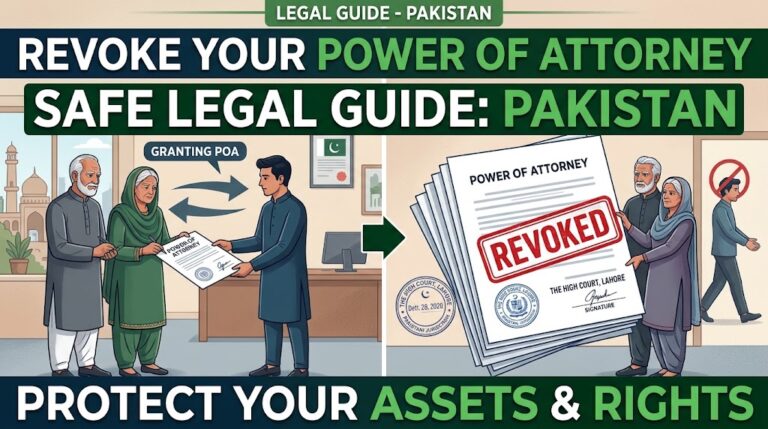
If someone still holds authority over your property after the trust has broken down, review that authority promptly. This is especially relevant for overseas Pakistanis who appointed relatives or agents to manage matters at home. To revoke power of attorney in Pakistan, consider the document, any existing transactions, and notice requirements. Signing a cancellation and keeping it in your drawer may leave a serious gap. Equally, revocation does not automatically reverse a completed sale. The right approach starts with checking what authority you granted, whether it remains revocable, and who must be notified that it has ended.
When Can You Revoke Power of Attorney in Pakistan?
A principal, meaning the person granting authority, can generally withdraw an agent’s authority, subject to legal restrictions. Existing obligations and an agent’s protected interest can limit that right. The Sindh High Court explains these restrictions under sections 201–204 of the Contract Act in a judgment concerning revoked property authority. Start with the actual document. A general power may cover several matters, while a special power usually concerns specified acts. However, the title alone cannot tell you everything. Read the operative clauses, expiry provisions, property details, and any authority to appoint someone else.
Check These Risks Before Signing a Cancellation
A revocation should follow an assessment of the arrangement behind the document. Two issues deserve particular attention before you assume cancellation will solve the problem.
The Agent May Claim an Interest in the Property
Section 202 protects certain agencies where the agent has an interest in the property forming the agency’s subject matter. Unless an express contract provides otherwise, termination cannot prejudice that interest. A Sindh High Court decision examining Section 202 distinguishes such an interest from simply acting as an agent. Tell your lawyer about associated loans, payments, sale agreements, or security arrangements. The word “irrevocable” requires examination, but so does an arrangement without that label. A standard cancellation template cannot resolve these underlying questions.
The Authority May Already Have Been Used
Ask what the agent has signed, received, or submitted on your behalf. A pending sale agreement, accepted payment, or completed transfer may require separate analysis. Do not assume that stopping future authority removes obligations already created. Request available copies of transaction documents and payment records. If the agent refuses, preserve that correspondence and obtain independent property records where available. Give your lawyer a timeline showing when you granted authority, when concerns arose, and what transactions you have discovered.
Prepare a Revocation That Identifies the Correct Authority
Have the revocation document identify the original power precisely. Include the date, parties, registration or attestation details, and the authority being withdrawn. If several powers exist, establish which documents need attention rather than assuming one cancellation covers everything. Ask your lawyer to confirm the execution, witnessing, attestation, and registration requirements applicable to your circumstances. These can depend on the original document and where you will use it. For a registered property power, specifically discuss the relevant registration office and how the revocation should be recorded. Keep signed copies and evidence of every subsequent submission. Avoid backdating the document or describing an unconfirmed transaction as established fraud.
Notify the Agent and Relevant Third Parties
Notice is central to an effective revocation. Under section 208, termination takes effect against the agent when they know it, and against third parties when they know it. The Sindh High Court’s analysis of notice and revocation addresses this distinction. Prepare a recipient list with your lawyer. Depending on the authority granted, relevant recipients may include:
- The appointed agent and any known substitute representative.
- A housing society or development authority handling the property.
- The relevant registration or land-record office.
- A bank, tenant, buyer, or other person dealing through the agent.
Retain delivery acknowledgments, courier tracking, emails, and official receiving stamps. Ask whether public notice is appropriate alongside direct communication. Do not assume that a newspaper advertisement alone proves every relevant person knew about the cancellation.
Act Promptly if a Sale Is Imminent or Already Recorded
If you discover an advertisement, proposed transfer, or appointment for execution, seek prompt advice about protective steps. Ask whether the evidence supports an injunction application or another appropriate remedy. A notice sent by a lawyer is not itself a court order preventing a sale. If ownership has already been transferred, obtain the transfer documents and relevant records before deciding what to challenge. Revocation alone does not establish that the transfer is invalid. Your lawyer must assess the authority used, the timing of the transaction, notice, and any grounds for challenging it. For example, learning about a transfer after returning from abroad creates a different problem from discovering an unsigned sale proposal. Explain which stage you are facing so advice addresses the actual risk.
Starting the Process From Outside Pakistan
Begin by sending clear copies of the original power and related documents to your lawyer in Pakistan. Have the proposed revocation checked before arranging signatures abroad. This reduces the risk of completing paperwork that doesn’t address the authority you need withdrawn. Check the relevant Pakistani mission’s current requirements for executing or attesting the document in your country. Also confirm the steps needed after it reaches Pakistan. Coordinate overseas execution, communication to the agent, and notification of local institutions rather than treating them as interchangeable actions.
What to Bring to a Property Lawyer in Lahore
A focused consultation needs more than an account of a family disagreement. Prepare a file containing:
- The original power of attorney or your best available copy.
- Your identification and the agent’s known contact details.
- Property ownership records and identifying particulars.
- Connected agreements, receipts, or payment evidence.
- Messages about proposed dealings or suspected misuse.
- Any earlier cancellation notices and delivery records.
Explain your immediate objective: ending authority, preventing a transaction, obtaining accounts, or challenging a completed dealing.
Protect Your Property With a Documented Next Step
To revoke a power of attorney in Pakistan effectively, connect the paperwork with the people and institutions relying on it. Check for restrictions, establish what has already happened, and preserve evidence of communication. If a transaction is imminent, tell your lawyer immediately instead of waiting for an informal family settlement. If a transfer is complete, ask for an assessment of that transaction and any future authority. Chaudhary & Associates can review your documents and discuss the appropriate legal steps. Bring the power, property records, and correspondence so your consultation starts with the facts that matter.
Disclaimer: This article provides general information. Advice on revocation depends on the document, associated arrangements, transactions, and applicable procedural requirements.
FAQs About Canceling a Power of Attorney
Does appointing a new agent automatically cancel the old power?
Do not assume so. Have both documents reviewed and make the intended withdrawal explicit. Otherwise, overlapping authority may create uncertainty.
Can I cancel the power if the agent keeps the original?
The agent’s possession of the original does not, by itself, determine whether it is revocable. Use available copies or registration particulars to get advice, and draft the notice carefully.
Does a revocation automatically cancel an earlier property sale?
No. Ending authority and challenging an earlier transaction are separate questions. The transaction’s validity requires its own assessment.
How much does revocation cost?
Costs depend on drafting, execution requirements, notices, registration-related work, and any litigation. Request an itemized estimate that distinguishes document preparation from disputed proceedings.